Government initiatives with tangible benefits for the region
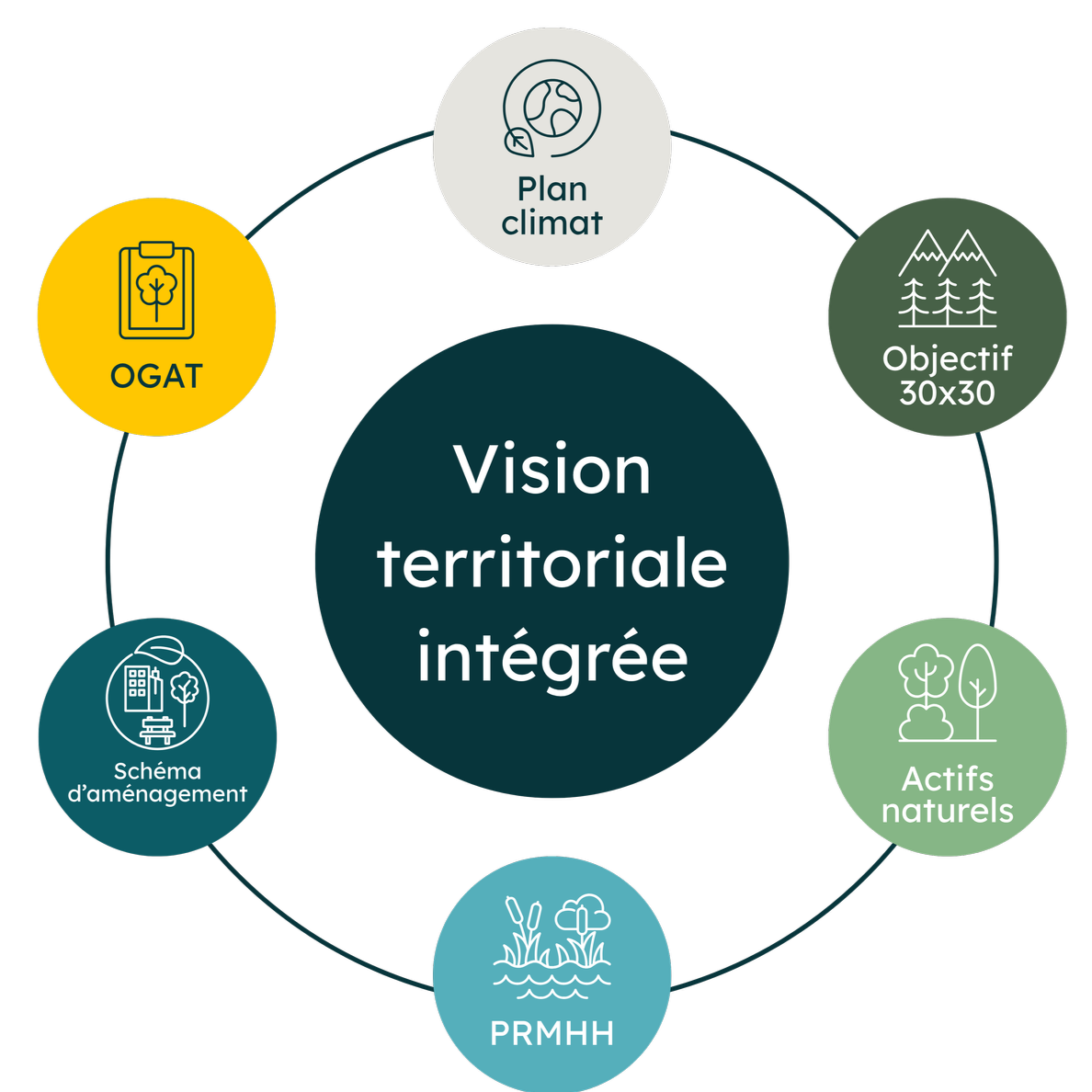
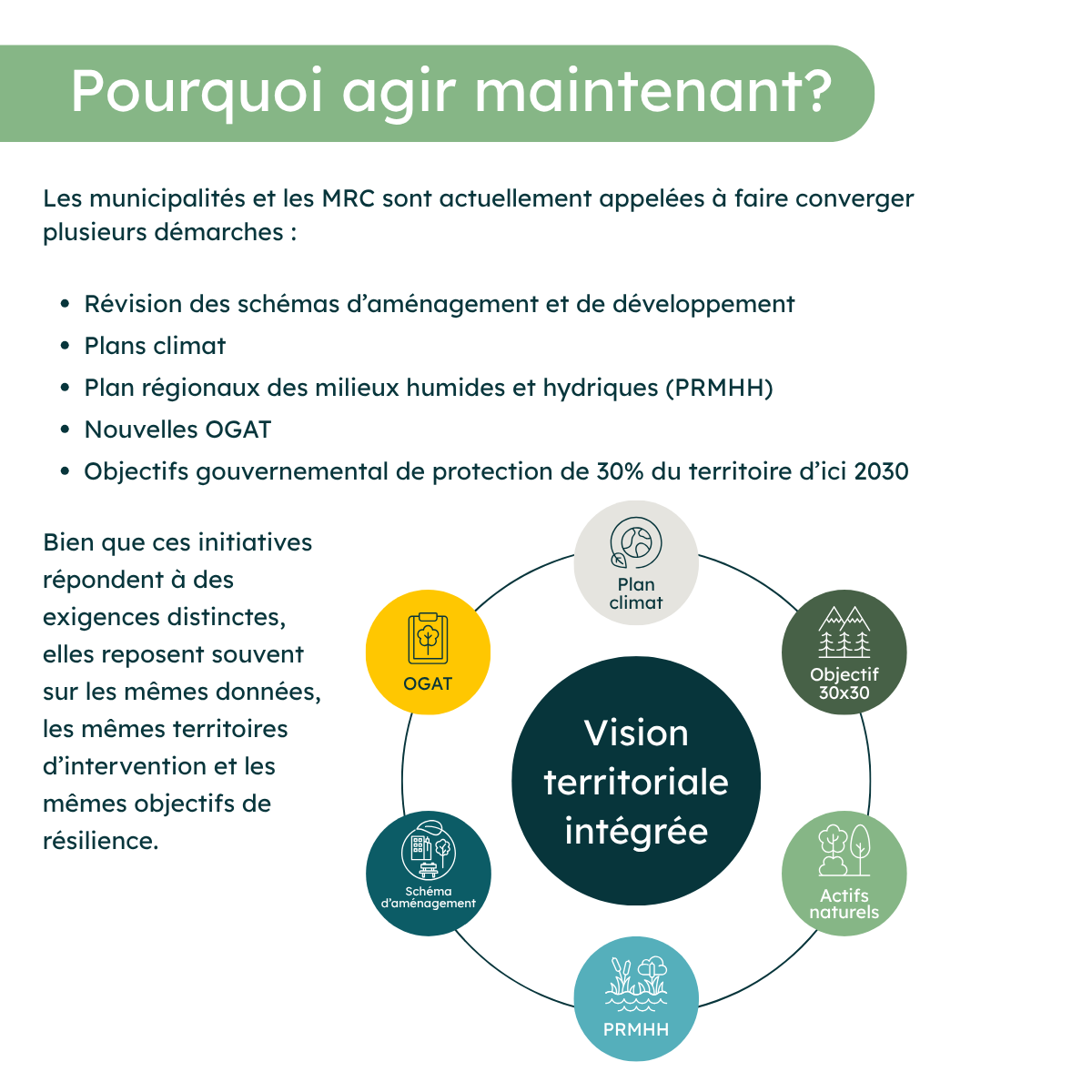
Cities and RCMs are currently being called upon to coordinate several government requirements: revising land use and development plans, developing climate plans, implementing Regional Wetland and Water Plans (PRMHH), integrating the new Government Guidelines for Land Use Planning (OGAT), and contributing to the goal of protecting 30% of the territory by 2030.
These efforts in land-use planning, climate change adaptation, and biodiversity conservation are much more than mere compliance exercises: they are powerful tools that will provide a lasting framework for land-use decisions and municipal investments.
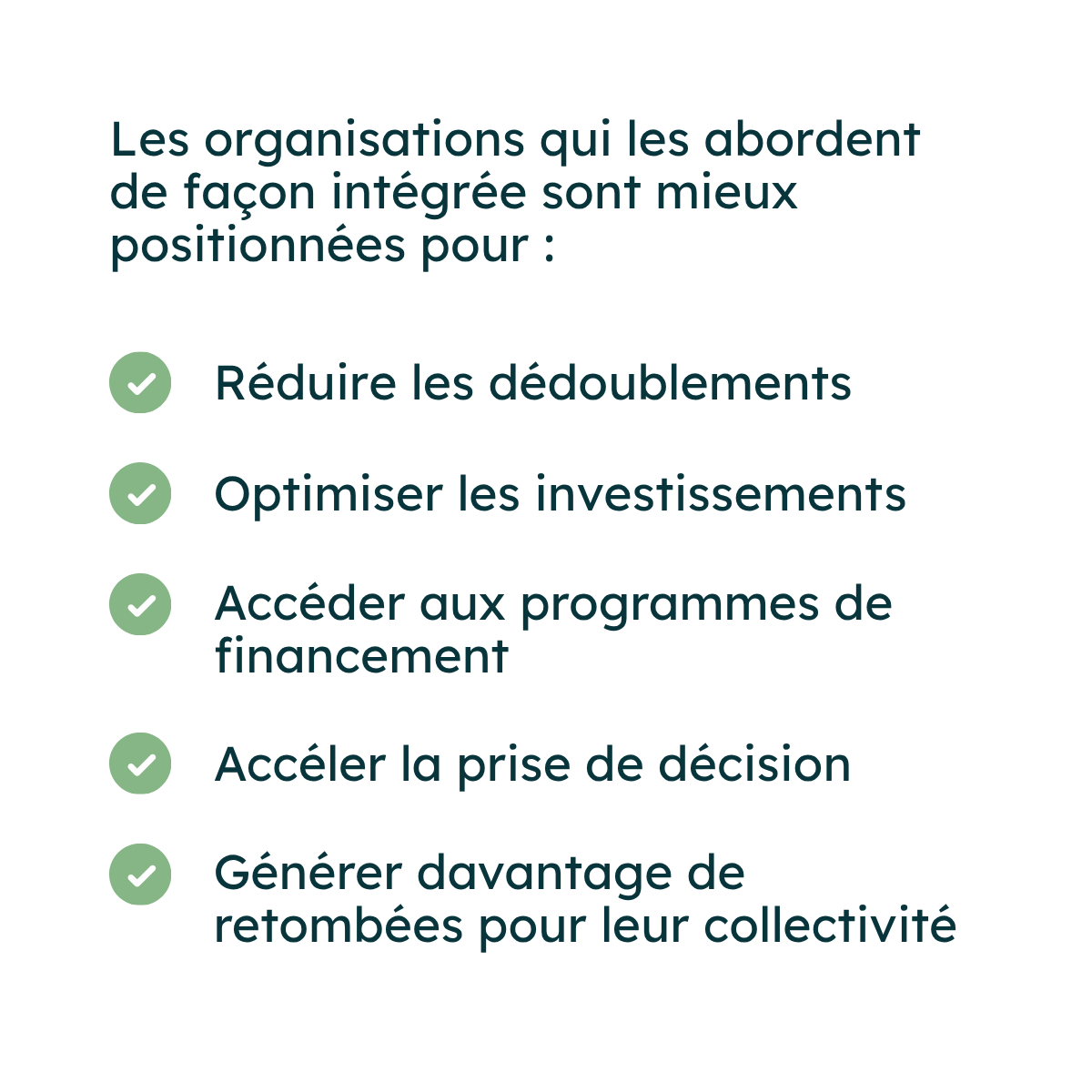
Very often, these initiatives are eligible for government funding earmarked for municipal stakeholders and Indigenous communities. Whether through programs offered by the Quebec Wildlife Foundation, the Canadian Federation of Municipalities’ (FCM) Green Municipal Fund, or other funding streams dedicated to climate adaptation and biodiversity, public funds can be mobilized to support projects whose benefits extend to the entire population, both today and in the future.
The FCM has also just made its climate resilience funding available to municipalities across Quebec. Habitat assist you in developing eligible projects, whether they involve climate change adaptation plans, urban forestry studies, land-use analyses, or feasibility studies.
5 Ways to Streamline Your Government Compliance Requirements
At Habitat, we help municipalities, regional county municipalities (RCMs), and public agencies maximize the impact of their efforts in land-use planning, natural habitat conservation, and climate change adaptation. By leveraging science, advanced geospatial data, and land-use analysis, we transform regulatory requirements into transformative projects that generate lasting benefits for communities.
Based on these principles, we invite you to:
Mapping Out Shared Priorities
Leveraging Natural Infrastructure
Incorporating Ecological Connectivity into Planning
Valuing Ecosystem Services
Consolidate funding processes
Some concrete examples of projects carried out by Habitat
• Hudson City Natural Habitat Conservation Plan
The City of Hudson has commissioned Habitat assess the current state of the area’s natural environments, identify available conservation tools and mechanisms, and propose a five-year action plan based on strategies for land management and the conservation of priority environments.
• Updating and expanding the Regional Natural Environment Plan (PRMN) of the L’Assomption RCM
Following an initial collaboration in 2021–2022 to develop the current PRMN for the MRC de L’Assomption, Habitat the MRC de L’Assomption leveraged cutting-edge mapping data to strengthen ecological connectivity and ecosystem resilience as key components of this plan, in line with the new OGATs.
• Nicolet-Yamaska RCM – Land-use scenarios and ecosystem services
Habitat assessed the current and future contribution of natural areas under various land-use scenarios in order to inform land-use decisions and the revision of the land-use and development plan.
• 30x30 Goal – Prioritizing conservation areas in Quebec
Using high-resolution ecological and economic data, Habitat developed conservation scenarios to help decision-makers meet government commitments regarding biodiversity and land protection.
• Resilience of Gaspé Forests – Climate Risk Management
Commissioned by the Gaspésie Integrated Resource and Land Management Board (TGIRT), Habitat the prioritization of adaptation and conservation measures aimed at strengthening the resilience of forest ecosystems in the face of climate change.
• Natural Assets and Municipal Management – A Strategic Opportunity for Regional Council Areas and Cities
Natural environments provide many essential services to communities, including stormwater management, mitigation of heat islands, carbon sequestration, and climate resilience. Habitat municipalities and regional county municipalities (RCMs) in identifying, assessing, and integrating these natural assets into land-use planning and infrastructure management processes.
Align efforts to maximize the benefits
Municipal organizations currently have a unique opportunity to integrate various regulatory, strategic, and financial initiatives into a coherent vision for the region.
Whether you are in the process of revising your land use and development plan, drafting your climate action plan, implementing your PRMHH, or considering your priorities for climate change mitigation and adaptation, Habitat help you turn these obligations into transformative, well-funded initiatives that deliver lasting benefits for your community.