Natural Habitat Conservation Plan for the City of Hudson: A Practical Tool for Biodiversity and Quality of Life
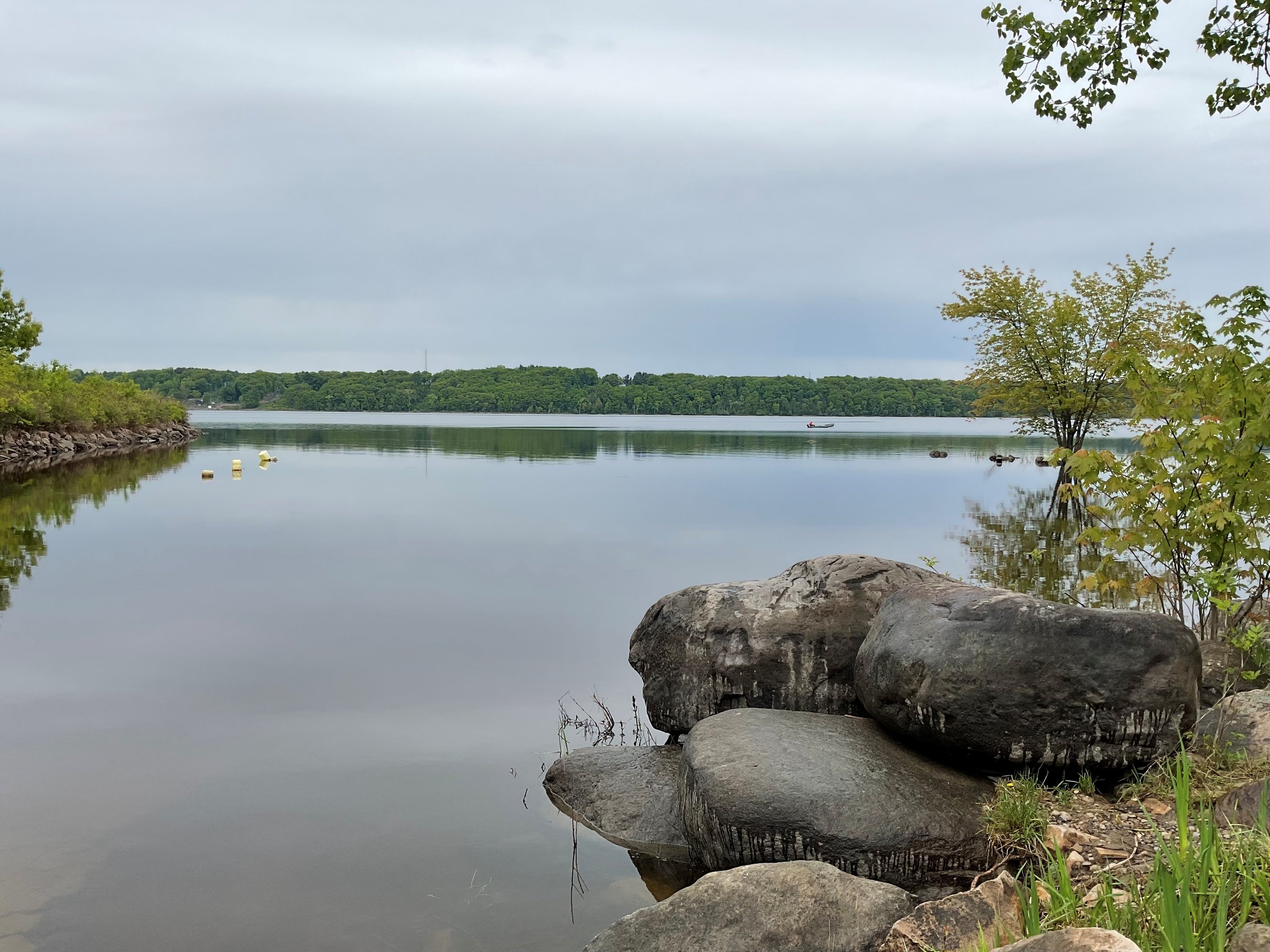
Photo credit: City of Hudson
How can a municipality protect its natural environments while engaging its community AND planning for the future in the face of climate change?
The City of Hudson recently reached a major milestone with the adoption of its Natural Habitat Conservation Plan, a significant initiative entrusted to Habitat. This project allows us to move from vision to action today, drawing on a detailed understanding of the local area and the scientific rigor that characterizesHabitat approach.
A conservation plan tailored to the region
The City of Hudson’s Conservation Plan is based on a rigorous analysis of the condition of natural habitats within the municipal area. Prepared by Habitat, it adheres to the latest scientific standards in landscape ecology and ecological connectivity, as well as the concerns and ideas raised by residents during public consultations, in order to identify priority habitats for conservation and restoration.
Specifically, the plan aimed to:
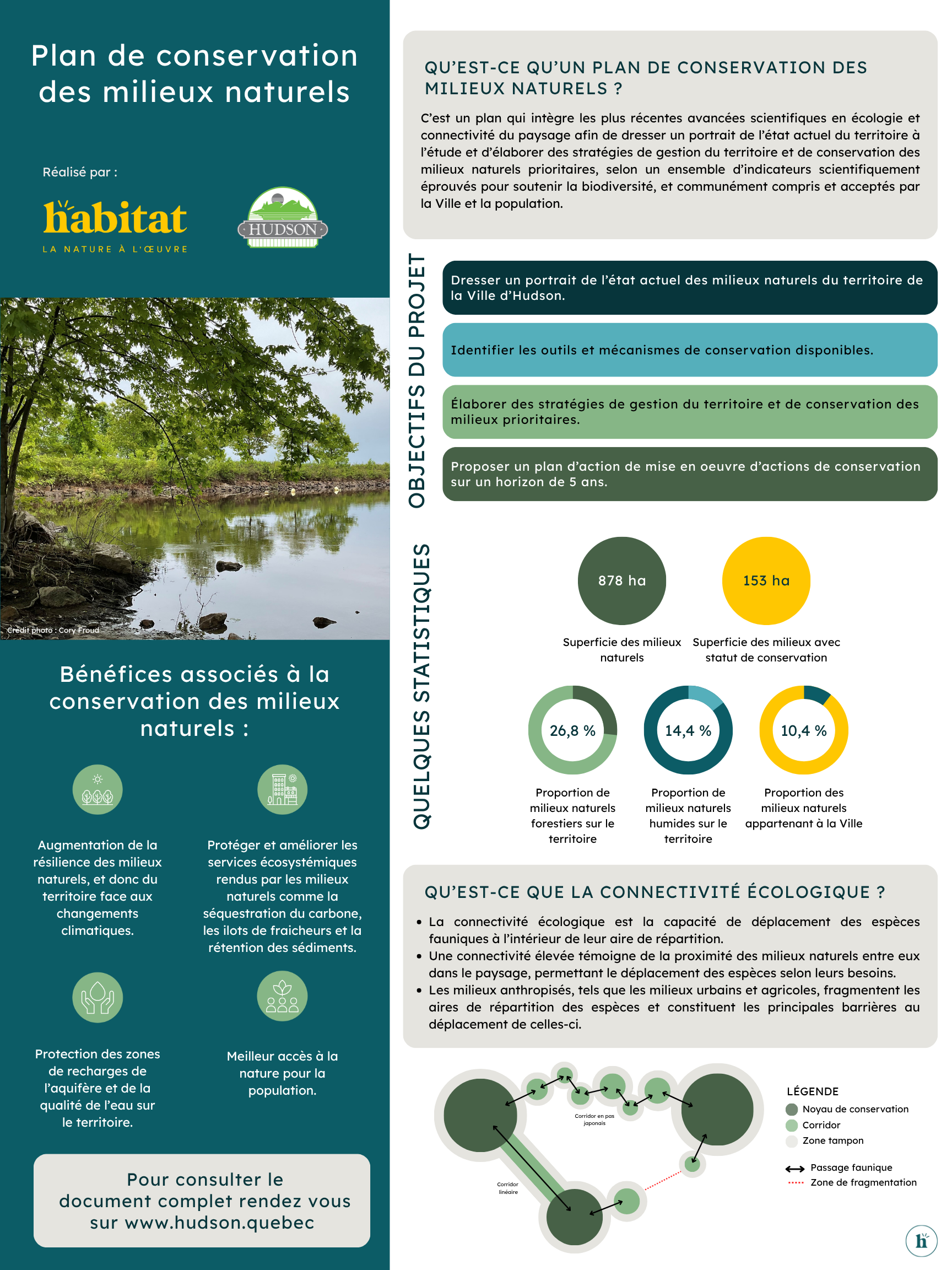
To provide an overview of the current state of natural environments within the City of Hudson.
Identify the conservation tools and mechanisms available.
Develop strategies for land management and the conservation of priority habitats.
Propose a five-year action plan for implementing conservation measures.
Would you like to develop a science-based conservation plan for your municipality that is tailored to your local circumstances? Contact theHabitat teamHabitat get started.
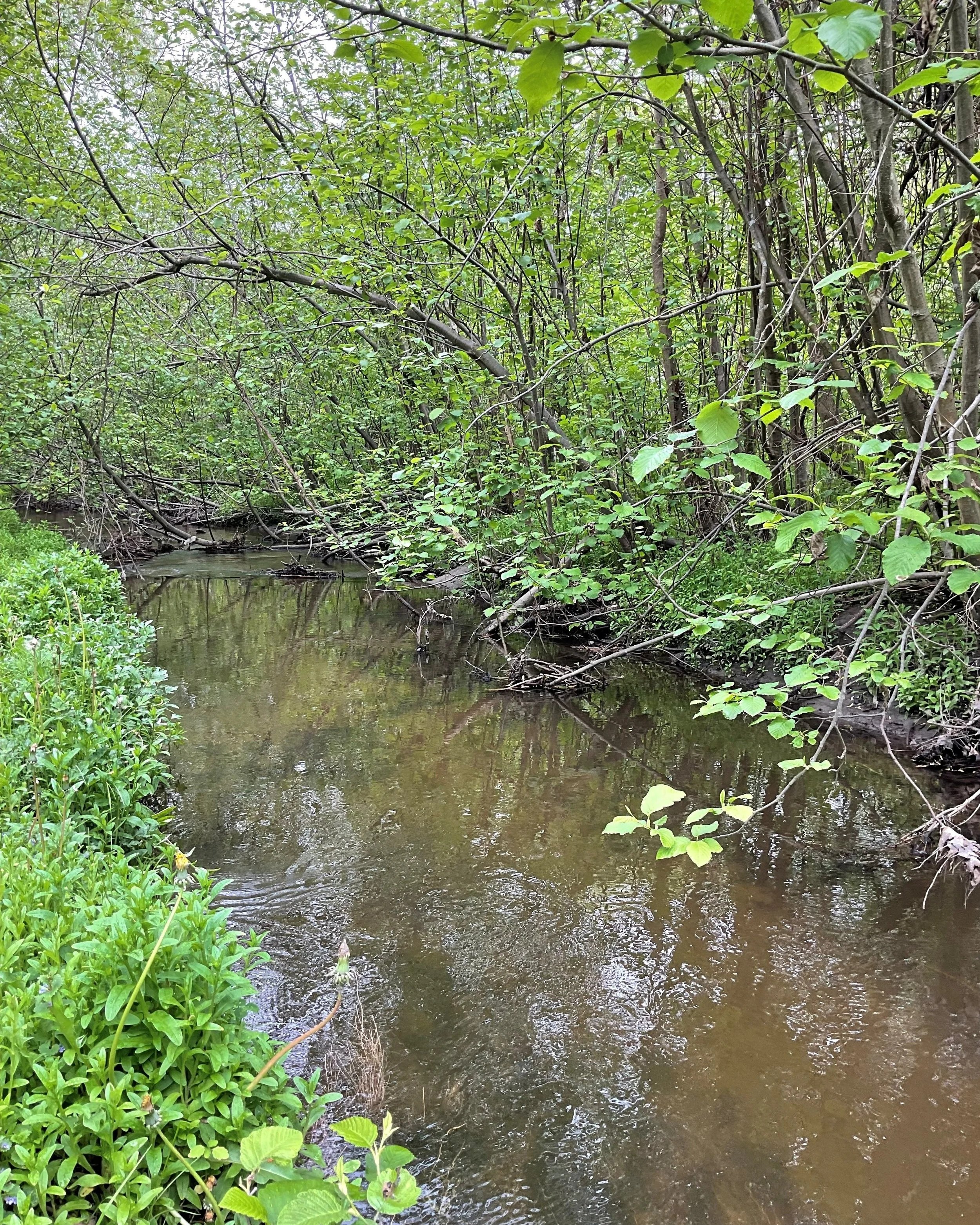
Photo credit: City of Hudson
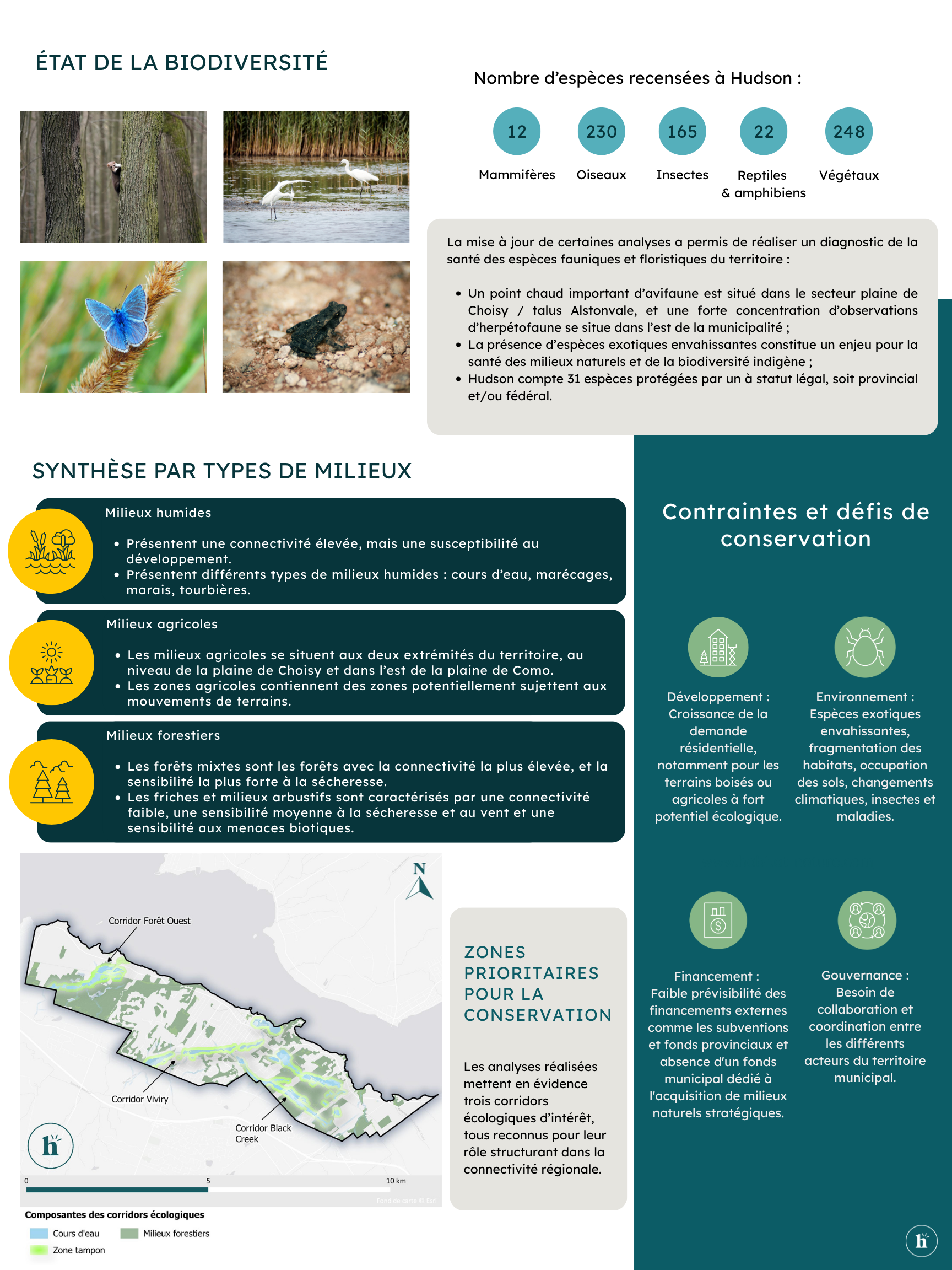
In particular, the analyses identified an impressive level of biodiversity, including 31 legally protected species and more than 675 species of flora and fauna, while highlighting issues related to habitat fragmentation, invasive alien species, and climate change.
A very positive response from the public and stakeholders
Since its adoption, the conservation plan has been very well received by the people of Hudson and local stakeholders.
According to the city representative we met with as part of this project, several residents highlighted the ambitious and transformative of the plan, while expressing a clear desire: to see these actions come to fruition on the ground.
“The response to the conservation plan has been very positive so far. Residents have noted that the plan is very ambitious and that they hope it will be implemented.” — Sofia Fuga, Head of the Environment Division, City of Hudson
This public support is essential to the project’s success. The City plans to officially present the plan to the public in 2026, in a spirit of dialogue and collaboration, in order to foster a shared sense of ownership regarding conservation issues.
“Citizen engagement must be part of the equation. We plan to present the Plan to the public in 2026 and invite residents to engage with us in a friendly atmosphere.” - Sofia Fuga, Head of the Environment Division, City of Hudson
A structured action plan to guide implementation
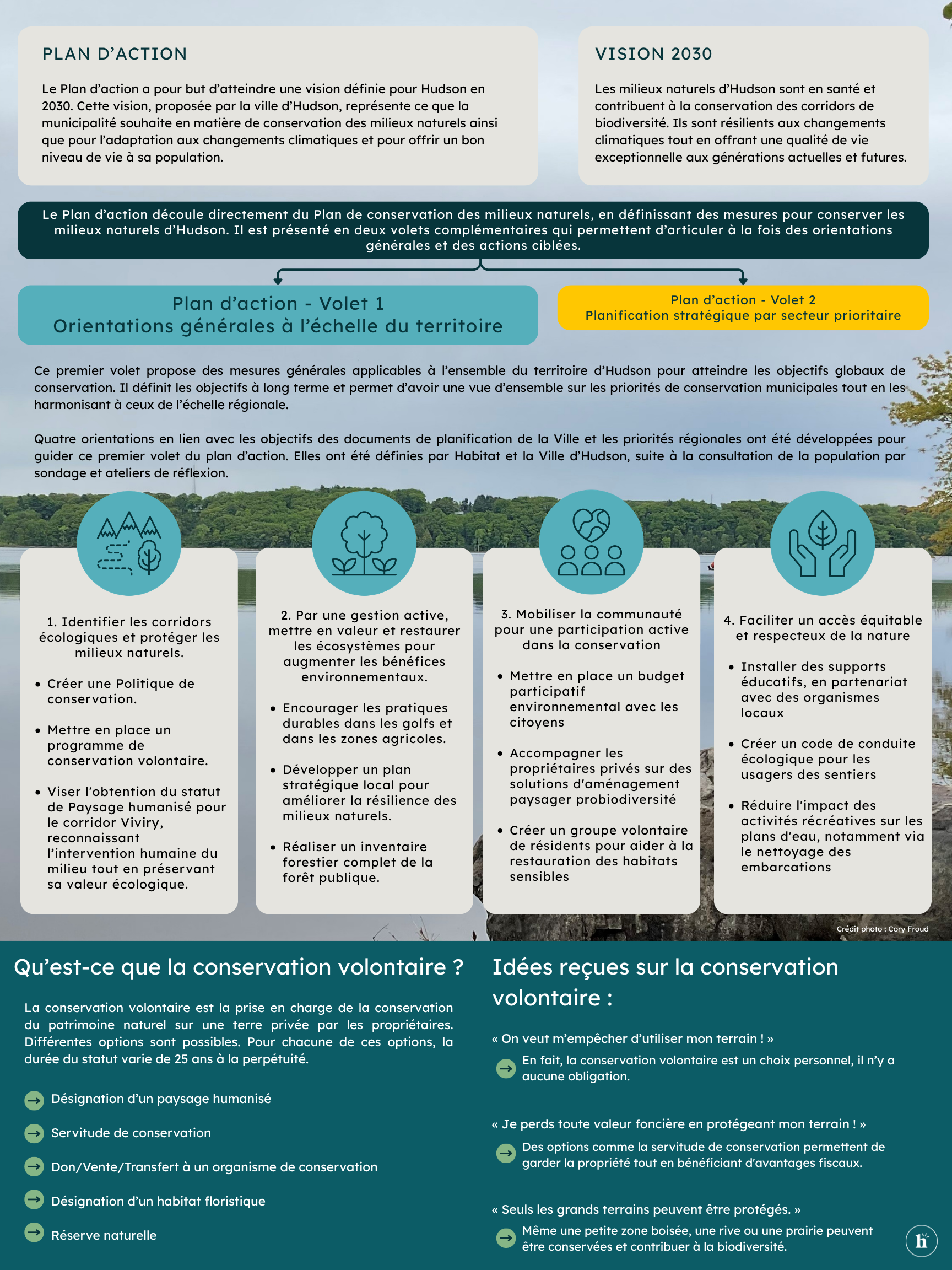
The action plan submitted to the City of Hudson consists of two complementary components:
Part 1 – General Guidelines
This first section outlines measures applicable throughout the region to achieve overall conservation goals. It provides an overview of municipal priorities while aligning them with regional challenges.
1. Identify ecological connectivity corridors and protect natural habitats.
2. Through active management, enhance and restore ecosystems to increase environmental benefits.
3. Engage the community in active conservation efforts
4. Facilitate equitable and nature-friendly access
What is ecological connectivity?
Ecological connectivity is the ability of wildlife species to move within their range.
High connectivity indicates that natural habitats are close to one another within the landscape, allowing species to move between them as needed.
Human-modified environments, such as urban and agricultural areas, are the main barriers to species movement and thus fragment their ranges.
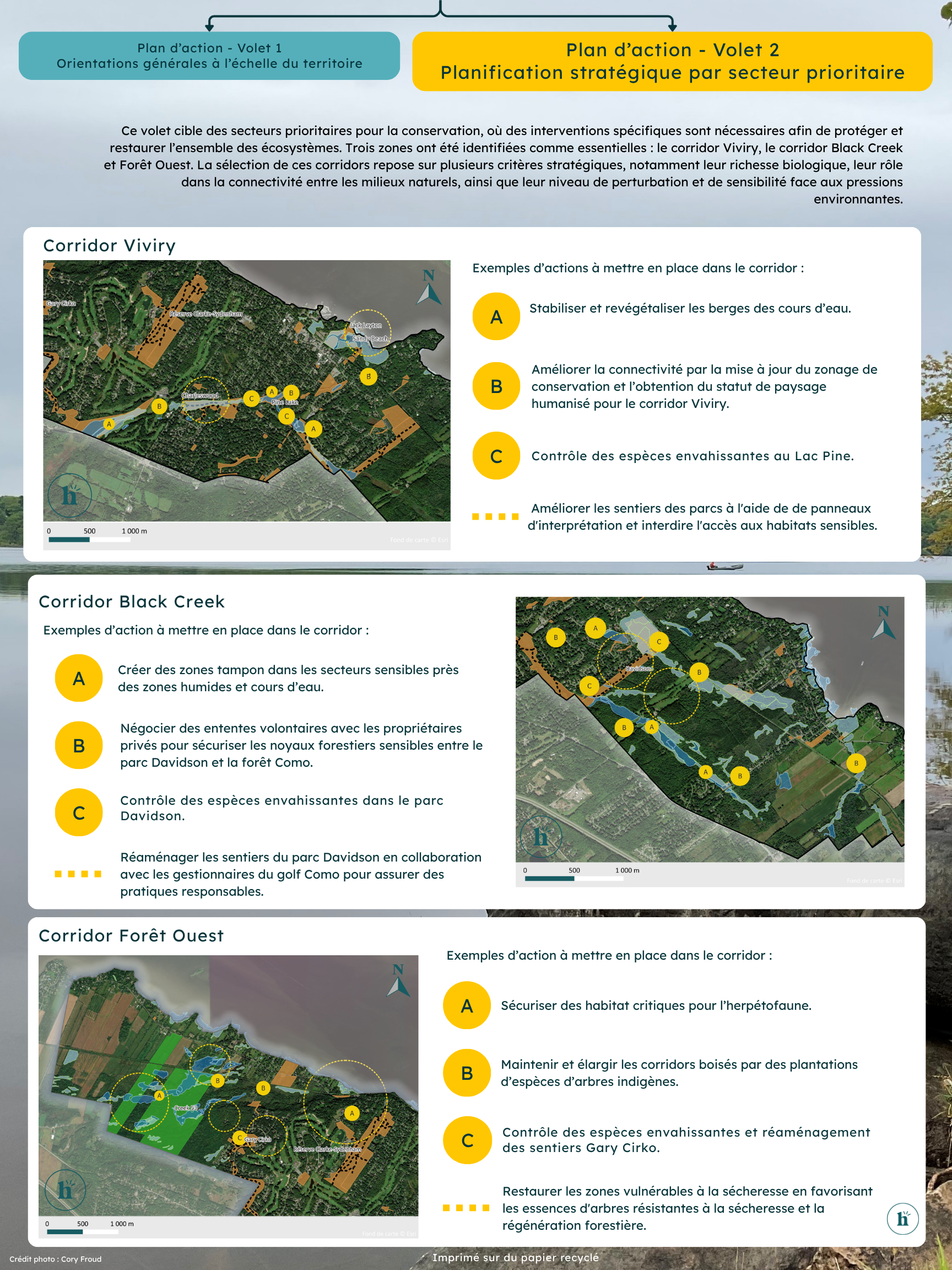
Part 2 – Strategic Planning by Priority Sector
Three sectors have been identified as priorities for conservation:
the corridor Viviry;
the corridor Black Creek corridor;
the corridor Western Forest.
These sectors are at the heart of key challenges related to ecological connectivity, biodiversity, and resilience to climate change.
From plan to action: results that are already clearly visible
Since the adoption of the Conservation Plan, several priority actions have already been implemented or are currently underway, including:
Major progress has been made towardthe acquisition and preservation of the Sandy Beach;
A project to control reed warbler in a cattail marsh;
A partnership with COBAVER-VS to combat water chestnut along the Ottawa River;
Obtaining ACSP certification by the city’s three golf clubs, promoting the reduction of pesticides and the protection of natural environments;
The start of work on the development of a Tree Policy ;
The establishment of a partnership with the Kanesatake First Nation, focused on sharing environmental knowledge;
The update to the regulations on the use of pesticides ;
Discussions with Nature-Action Québec regarding the designation of a human-shaped landscape;
The City’s active participation in the development of the Climate Plan of the Vaudreuil-Soulanges RCM
These achievements provide concrete evidence of how a conservation plan can become an operational tool that supports biodiversity, climate adaptation, and the quality of life of citizens.
Strengthened governance to ensure follow-up
To ensure that the conservation plan becomes a permanent part of its municipal practices, the City of Hudson took a key step: in the fall, it established an Environment Division dedicated to implementing the action plan.
This division is responsible, in particular, for:
To coordinate conservation efforts;
Monitor the indicators;
To produce a public annual report, promoting transparency and accountability.
This governance framework enables strategic planning to be translated into measurable actions that are monitored over time.
Informational fact sheets to help you better understand and take action
As part of the project, Habitat also Habitat a series of informational fact sheets, designed to make the key concepts of the conservation plan accessible to both elected officials and citizens.
These fact sheets cover the following topics:
The objectives of the Natural Habitat Conservation Plan;
Ecological connectivity and its role in biodiversity;
The benefits of natural environments, such as carbon sequestration, protection of water quality, and cooling islands;
The principles of voluntary conservation, debunking certain common misconceptions;
The guidelines and actions outlined in the action plan.
These tools play a central role in community engagement and help foster local ownership of conservation issues.
Why choose Habitat
TheHabitat teamHabitat together all the necessary expertise (ecology, biodiversity, ecological connectivity, land-use planning) and in-depth knowledge of the region.
“The scientists’ openness and willingness to engage made a strong impression on the City’s team. The action plan is of great importance. It fully meets the expectations of the City Council and the team responsible for implementing it.” - Sofia Fuga, Head of the Environment Division, City of Hudson
What if your municipality adopted a conservation plan that was commensurate with its territory?
For any municipality wishing to undertake a similar initiative, the City of Hudson offers this key advice: clearly define expectations from the outset and allow for sufficient internal communication to ensure a shared vision.
TheHabitat teamHabitat assist you at every step of the process to develop conservation plans based on:
A solid ;
Involvement of stakeholders;
Clear and accessible;
And the political will to go beyond the document and take action.