


Unlike protected areas, AMCE areas do not have biodiversity conservation as their sole objective, and human activities are therefore not excluded. However, these activities must be compatible with the conservation of biodiversity in perpetuity.
So how can you ensure compatibility?
The guidelines developed for the implementation of the project
In 2024, the Government of Quebec developed Guidelines for the Recognition of Other Effective Conservation Measures (OECMs) in Continental Areas in Quebec. This important step aims to give the Government of Canada a head start in achieving Target 3 of the global biodiversity framework, which aims to protect 30% of land, inland waters, and marine environments by 2030.
To produce these guidelines, the MELCCFP called on Habitat 2022 to conduct an in-depth literature review on AMCE worldwide and formulate recommendations for their recognition in Quebec.
Our recommendations: Management that promotes biodiversity
Unlike protected areas, an AMCE can have a variety of objectives, while still generating positive results for biodiversity:
Conservation measures must be monitored;
Landscape-scale planning must be carried out to conserve areas of importance for biodiversity and strengthen the overall resilience of ecosystems.
The management system must include measures to control current and future threats.
A review of essential literature
Based on this review and these recommendations, the guidelines provide guidance to applicants for AMCE projects, in particular by establishing activities that are compatible and those that are likely to be incompatible with biodiversity conservation. However, this susceptibility complicates the review of applications, and activities must therefore be examined on a case-by-case basis.
To facilitate the review of the submissions received, the Government of Canada mandated Habitat determine how various human activities may or may not be compatible with biodiversity conservation. Based on the most up-to-date knowledge, the literature review provides information on the impacts of several human activities on biodiversity, including forest management, recreational activities, and renewable energy production and transportation.
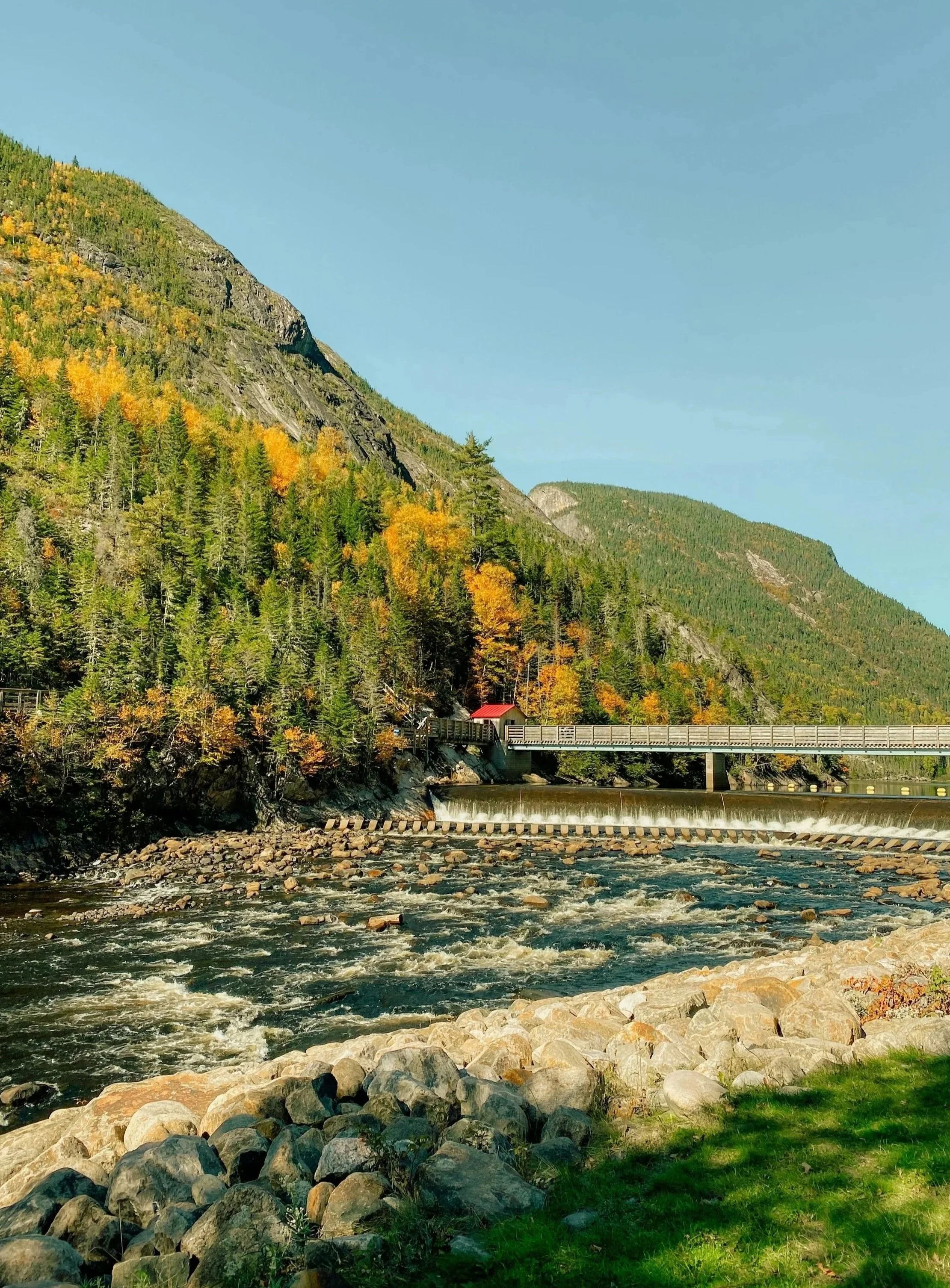
The results obtained highlight several important facts to consider when analyzing CBA projects:
Among forest management activities, only sustainable management practices (e.g., partial cutting with permanent cover or maple syrup production with biodiversity-friendly management) can be compatible with biodiversity conservation.
The presence of trails has varying impacts on biodiversity;
Winter recreational activities have varying impacts on biodiversity and should be limited in sensitive areas;
Motorized recreational activities have a significant impact on wildlife (even from trails) and are not compatible with biodiversity conservation.
The construction of infrastructure has a significant impact on biodiversity and is therefore not compatible with conservation areas.
Dams are not compatible with biodiversity conservation.
The intensity of human activities on biodiversity varies, and the literature does not clearly establish the criteria for the critical scale and intensity of a human activity for conservation. Therefore, activities within the territory of an AMCE should be monitored over time to ensure that they do not impact the state of biodiversity present.
Would you like to learn more about our conservation and biodiversity services?